“We are neither a traditional farmers’ market nor a traditional grocery store, but rather an intersection that takes the best features of both.” — Argus Farm Stop, Ann Arbor, MI
A new type of grocery store is growing in popularity as a part of the local food movement: the Farm Stop. Combining the ambiance of a farmers’ market with the convenience of a neighborhood grocery, Farm Stops are reinventing how communities connect with local producers by offering year-round retail access and transparent, producer-centered pricing that keeps more money in farmers’ hands.
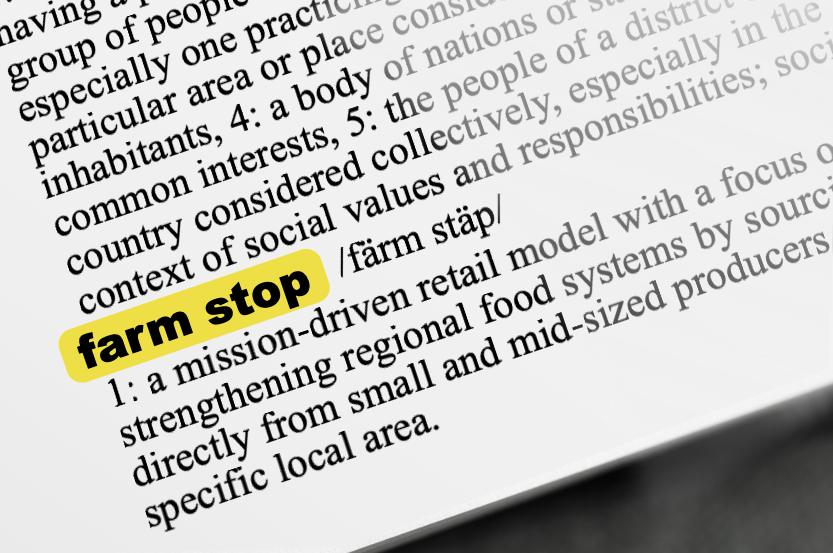
The Farm Stop is a mission-driven retail model focused on strengthening regional food systems by sourcing directly from small and mid-sized producers in a specific local area. It builds on traditional food practices like public markets, farm stands, and cooperatives, while addressing a modern challenge: the increasingly centralized grocery system that has limited visibility and market opportunities for small farms. Consumers want an “all-in-one” shopping experience with the variety, display, and convenience of a large chain grocery store.
How It Works
Farm Stops are year-round retail storefronts that bring together products from dozens, sometimes hundreds, of local farms and food producers. Unlike traditional grocery stores that depend on wholesale buying and markups, Farm Stops typically operate on a consignment basis: producers set their own retail prices, while the store keeps an agreed-upon percentage, ensuring farmers get the majority of the final sale price and are supported with in-store merchandising, marketing, and modern displays and refrigeration.
This model shortens the layers between farm and fork, increases farmers’ potential earnings, keeps pricing transparent, and provides consistent retail access beyond seasonal markets. Farm Stops work alongside and often partner with Food Hubs, Farmers’ Markets, Food Cooperatives, CSA Programs, and Mobile Markets, combining elements of each into a single retail space.
Key features of the Farm Stop model include:
-
- Direct partnerships with farmers, food makers, and regional distributors with limited or no national supply chains
- Year-round, consistent retail space for locally produced goods
- Transparent pricing structures with producer stories front and center
- Seasonal and regional availability prioritized over imported alternatives
- Hybrid offerings like prepared foods, online ordering, CSA coordination, and wholesale to schools and institutions
Farm Stops in Michigan: The Argus Story
The Farm Stop model was born in Michigan. In 2014, Argus Farm Stop opened inside a renovated gas station in Ann Arbor, driven by a simple motto: “Our future is local.” What started with a $180,000 investment has grown into a regional anchor: today, Argus operates two markets and two cafés, employs 65 people, partners with nearly 200 local producers, and generated $6.5 million in sales in 2023.
Argus’s growth has had noticeable ripple effects on the local agricultural economy, leading to more farmland being used in Washtenaw County over the last decade. It shows what can happen when a grocery store focuses on supporting producers rather than just supply-chain efficiency.
Other Farm Stop and Farm Stop-aligned stores operating in Michigan and elsewhere include:
-
- Coming Soon! Mill Street Market & Café, Hastings, MI
- Acorn Farmers’ Market & Café, Manchester, MI
- Random Harvest, Craryville, NY
- Local Roots Market and Café, Wooster, OH
- The Wild Ramp, Huntington, WV
- Boone Street Market, Jonesborough, TN
While each has its own character, all prioritize direct sourcing and producer-forward economics while serving as local food aggregation hubs.
More Than a Grocery Store
Farm Stops function as community anchors, not just retail spaces. By shortening supply chains and rebuilding direct relationships between producers and consumers, they create layered benefits for the regions they serve:
-
- Economic Impact: More food dollars circulate locally, supporting jobs, farm viability, and small business growth.
- Producer Visibility & Viability: Farmers gain consistent, year-round market access and retain stronger margins through direct partnerships.
- Education & Transparency: Customers build trust through clear sourcing, awareness of seasonality, and a connection to the people behind their food.
- Community Gathering Space: Markets and cafés create venues for workshops, tastings, and food-system dialogue.
At their core, Farm Stops focus on creating a grocery model that supports farmers, empowers consumers, and fosters stronger local food economies. They leverage retail as a means for community wealth-building rather than extraction.
Challenges and the Road Ahead
Like many mission-driven food system models, Farm Stops face real operational challenges: balancing fair prices for farmers with consumer affordability, managing seasonal supply changes, competing with large grocery chains, and maintaining enough sales volume to keep running. Long-term success often depends on strong community ties, deep local involvement, and diverse sources of income.
At the same time, Farm Stops continue to develop as communities face increasing food insecurity and fewer dependable markets for small farms. From expanding prepared-food options to partnering with schools, hospitals, and food-access programs, these stores are finding practical, community-focused ways to expand their impact.
As more people look for locally grown, fairly priced food, the Farm Stop model has a chance to have an even greater impact on Michigan’s regional food future.
Learn More
Want to dig deeper into the Farm Stop model? These resources are a great place to start:
-
- Farm-to-Grocery Best Practices: Rural Grocery Initiative
- How to Start a Farm Stop: Fulcrum Open Access
- Argus Farm Stop: Our Approach: Ann Arbor, MI
- Farm Stops Create New Markets for Small Farmers: Civil Eats