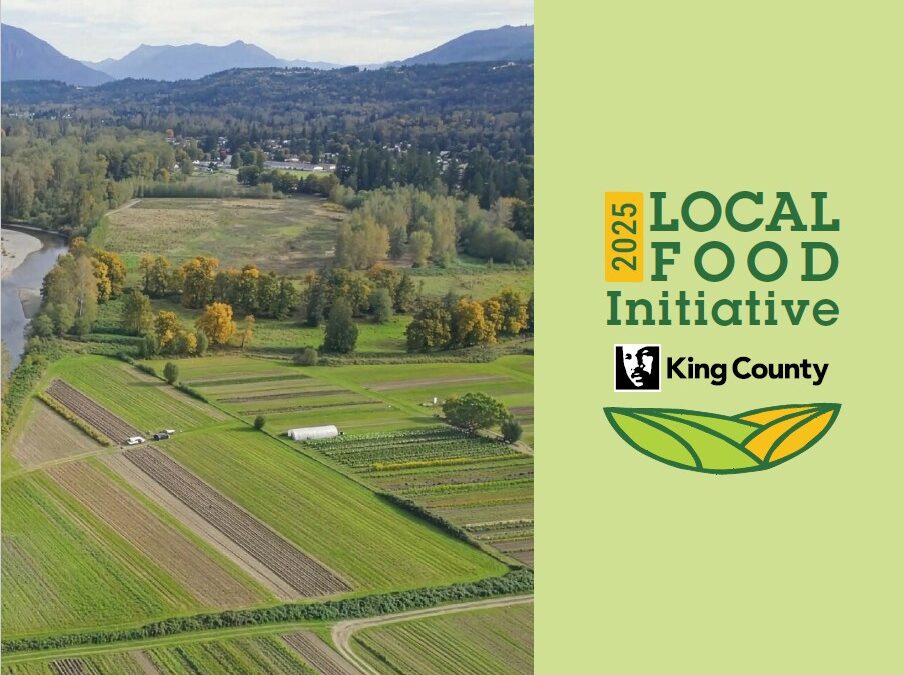
Since 2015, King County’s (WA) Local Food Initiative has provided a 10-year roadmap for strengthening the regional food system. The plan has guided investments, informed policy decisions, and supported cross-sector collaboration to expand farm viability and improve food access across the county.
In 2024, King County and King Conservation District launched an 18-month process to update the Local Food Initiative and set direction for the next phase of work.
The Need for an Updated Food Plan
As the original 2015 Local Food Initiative timeline approached completion, County partners recognized the need to reassess priorities and respond to significant changes over the past decade. These included the impacts of the COVID-19 pandemic, increasing climate risks, growing development pressure on farmland, and a stronger need to focus on racial and environmental justice.
The update created an opportunity to build on past progress while addressing gaps and emerging challenges. The 2025 update looked to:
-
- Strengthen equity and climate resilience strategies
- Improve coordination across County departments and jurisdictions
- Incorporate new community voices and lived experience
- Align with updated County policy frameworks, including the Strategic Climate Action Plan
King County is among the first communities nationally to refresh an existing food system plan rather than initiate a new planning effort, demonstrating a commitment to building from prior investments and sustaining long-term implementation.
A Community-Driven Process
With support from New Venture Advisors, the update process centered community engagement and resulted in a clear set of goals, priority actions, and a roadmap for the next decade. The goal was not simply to revise a document, but to co-create a shared vision for the next decade of food system work. The 18-month update process centered on stakeholder and community engagement. This input helped identify shared priorities, system barriers, and opportunities for action.
Engagement activities included:
- Formation of a 20+ member Food System Advisory Council (FSAC) to provide ongoing guidance
- More than 1,600 survey responses from King County residents
- Fourteen listening sessions representing producers, food businesses, hunger relief organizations, advocates, and community members
This input helped identify shared priorities, system barriers, and opportunities for action.
The refreshed Local Food Initiative outlines four interconnected goals and more than 83 actions—including 10 priority actions to jumpstart implementation.
What Comes Next
As King County moves into implementation, the focus turns to accountability, partnership, and sustained investment. The refreshed Local Food Initiative positions King County to strengthen farm and food business viability, expand access to affordable food, and advance climate resilience through coordinated policy and investment.
At New Venture Advisors, our role extended beyond drafting the plan. We partnered with King County and King Conservation District to design a process that translated community priorities into clear implementation-ready actions. Equally important, the process strengthened the existing cross-sector network and created a shared foundation for coordinated action for the next decade to come.
Photo courtesy of King Conservation District